
Fortica●
Above Hvar Town
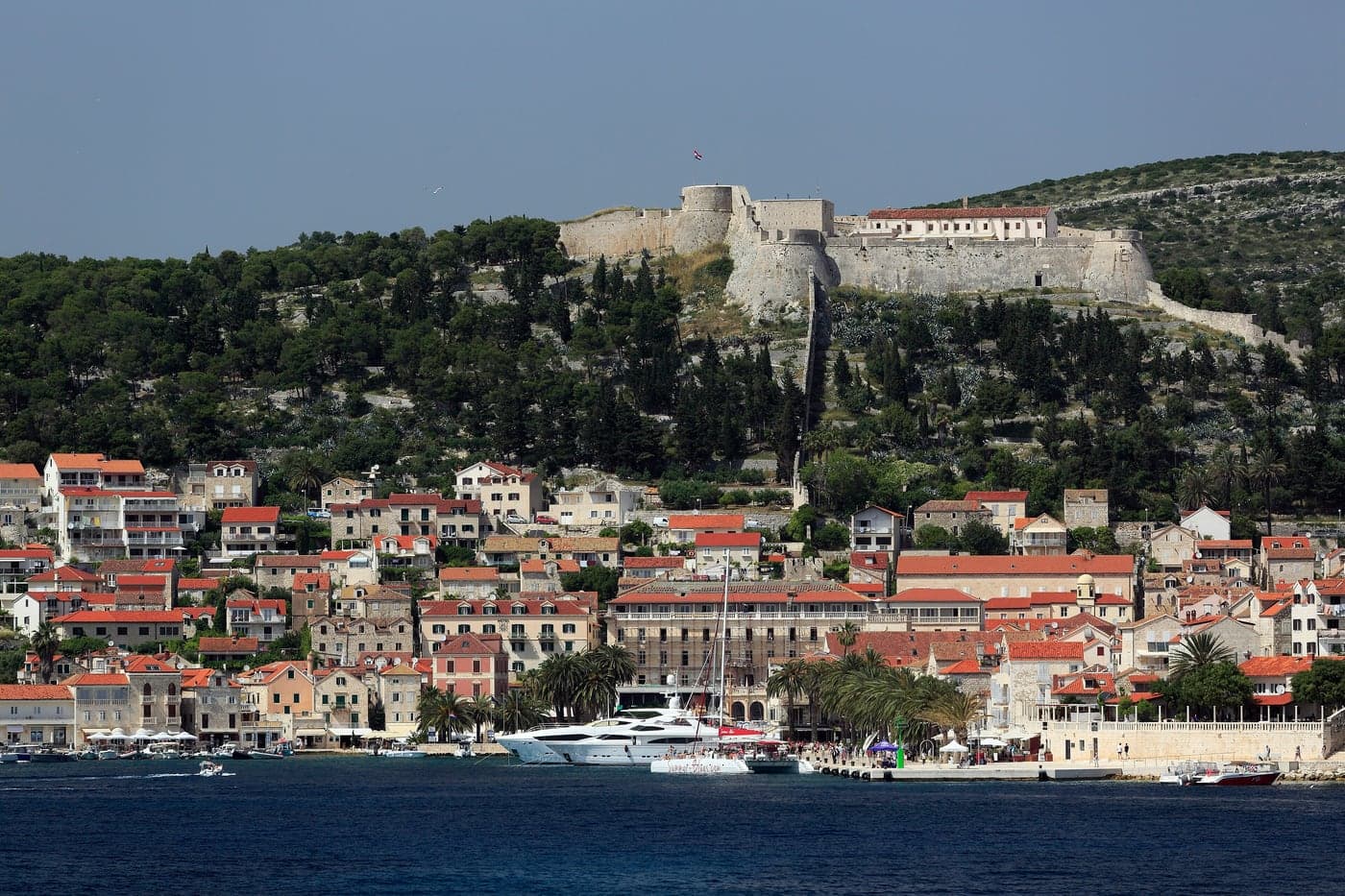
The Spanish fortress above the harbour, begun after 1278 and given its present form in the sixteenth century — walls, bastions and the whole town laid out below. The climb is the price of the view; take it in the morning.
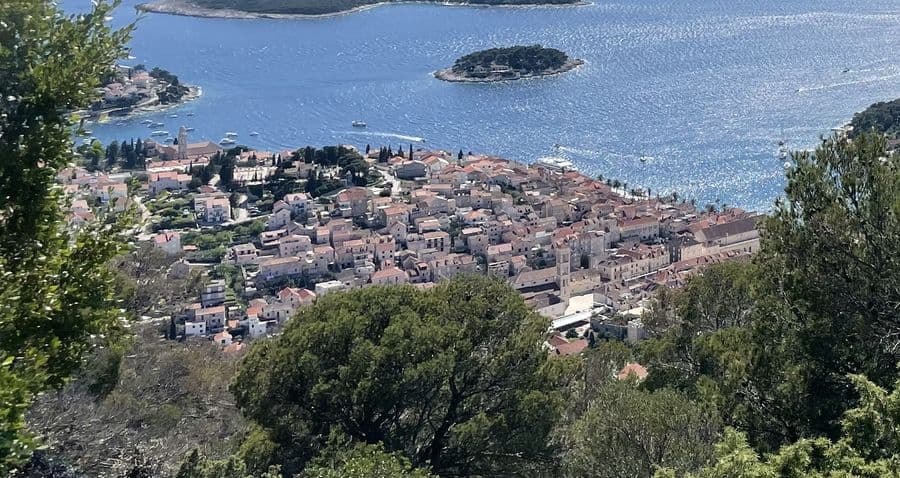
The fortress above the harbour, the theatre in the Arsenal, a poet's house in Stari Grad, the Greek field, a cave on the south slope, and an easy walk through Vrboska — the island as it is walked, not listed.
The Spanish fortress above the harbour, begun after 1278 and given its present form in the sixteenth century — walls, bastions and the whole town laid out below. The climb is the price of the view; take it in the morning.
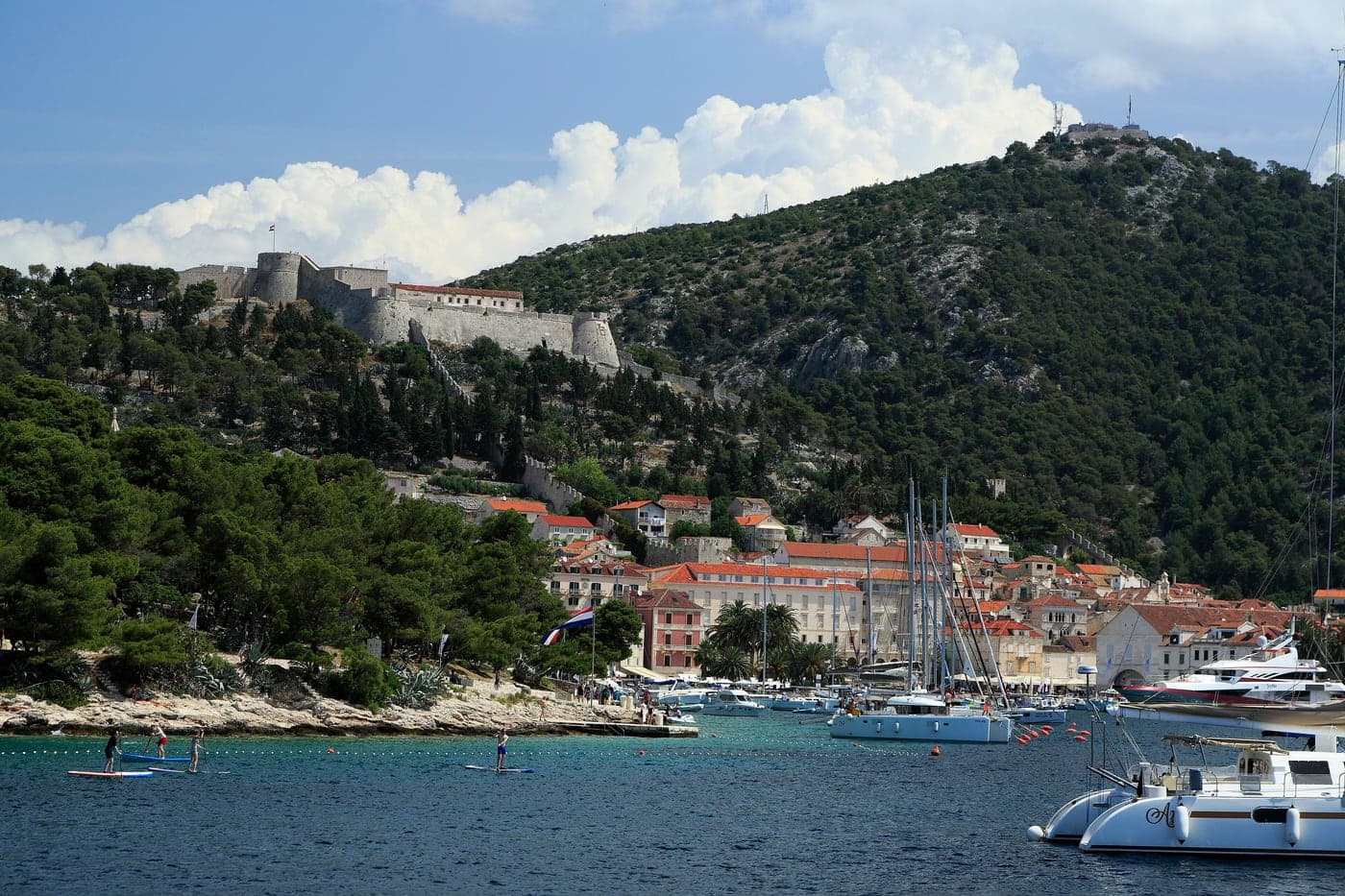
A hard walk of some nine and a half kilometres — three and a half hours, two hundred metres of height — from the Fortica along the old defensive line to the Napoleon fort and back. Macadam and stone; not a promenade.
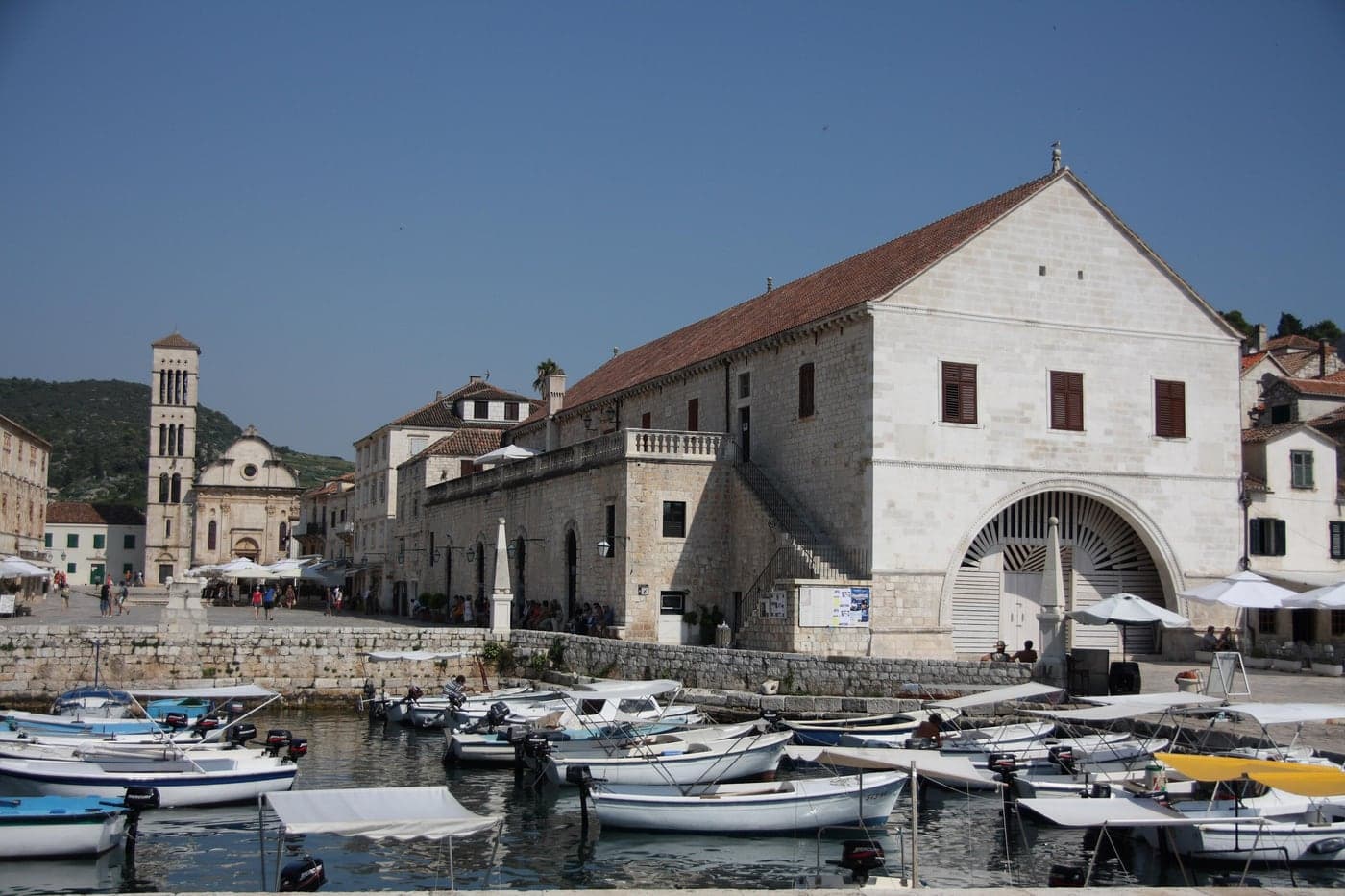
Europe's first public theatre, opened in 1612 on the upper floor of the Arsenal — nobles and fishermen under one roof, as they still say on the square. The building is the harbour's great stone gate; the auditorium is the quiet above it.
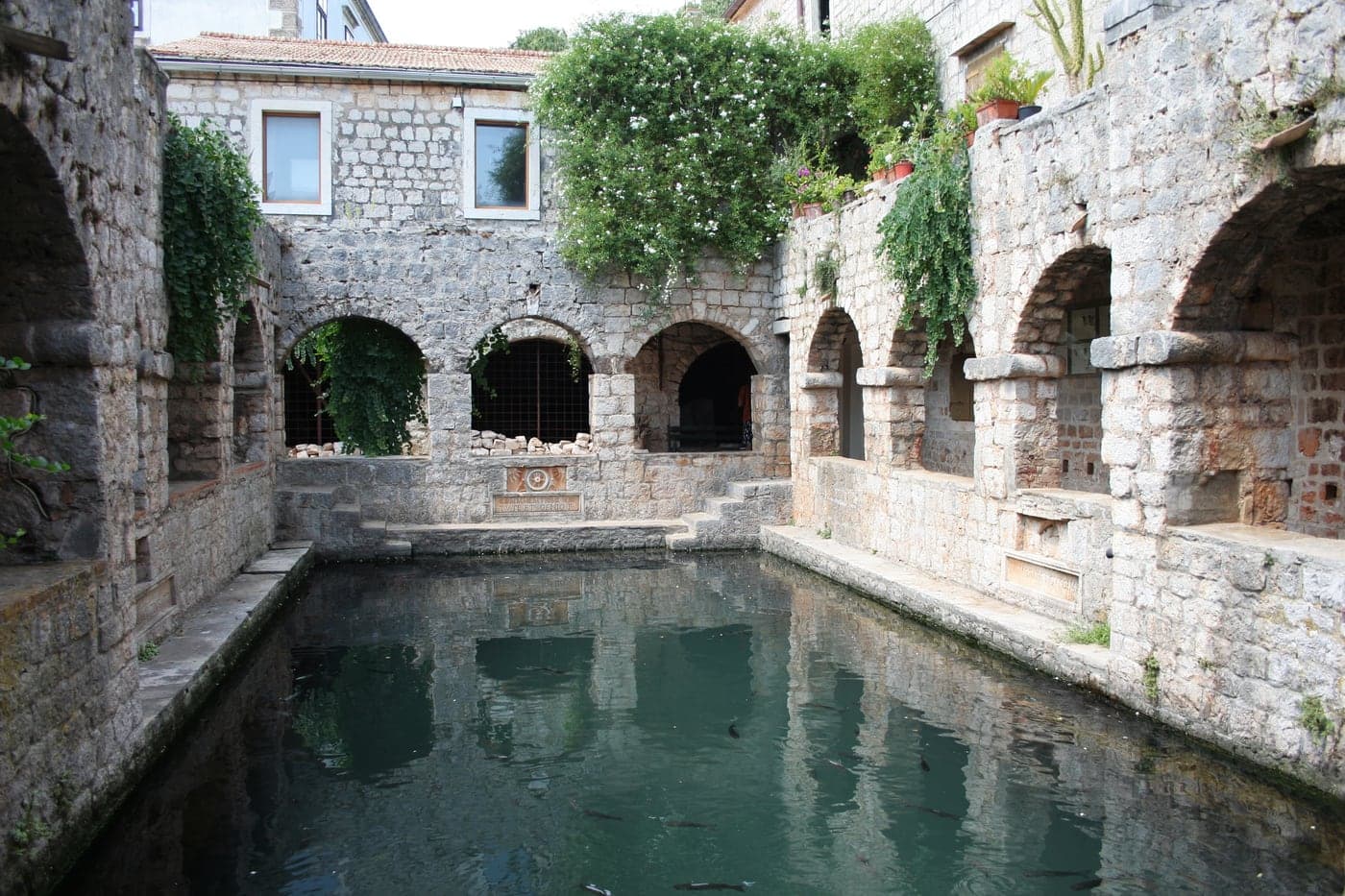
Petar Hektorović's fortified house — a fishpond in the courtyard, Latin in the stone, and the poet's idea of a small world where fish, birds, plants and people each have a place. Sit by the water; that is the work he left.
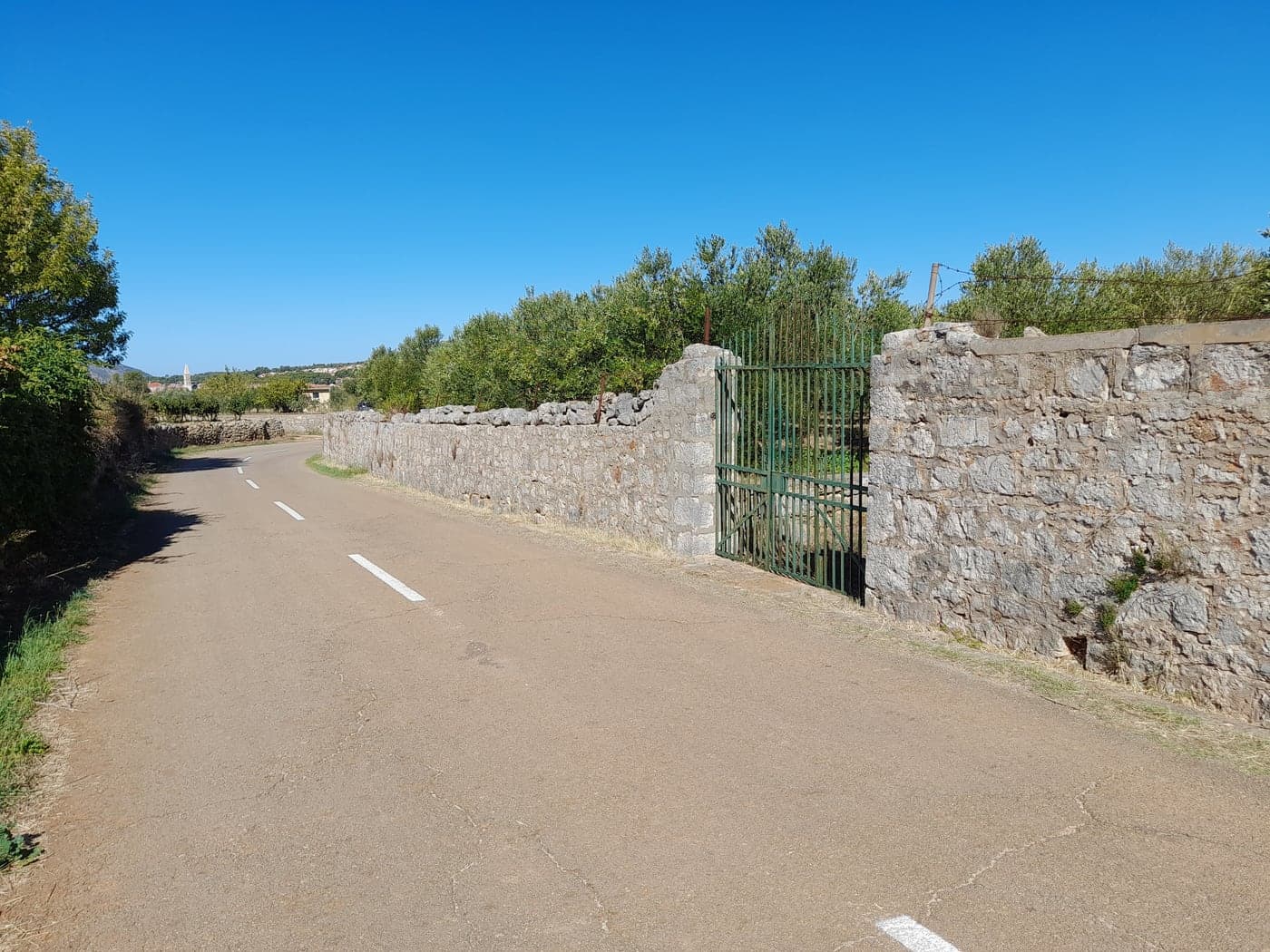
The Greek field of Pharos, still divided by drystone as it was twenty-four centuries ago — vines, olives, lavender and carob in the oldest cadastral pattern on the Mediterranean. UNESCO keeps the lines; the island still works them.
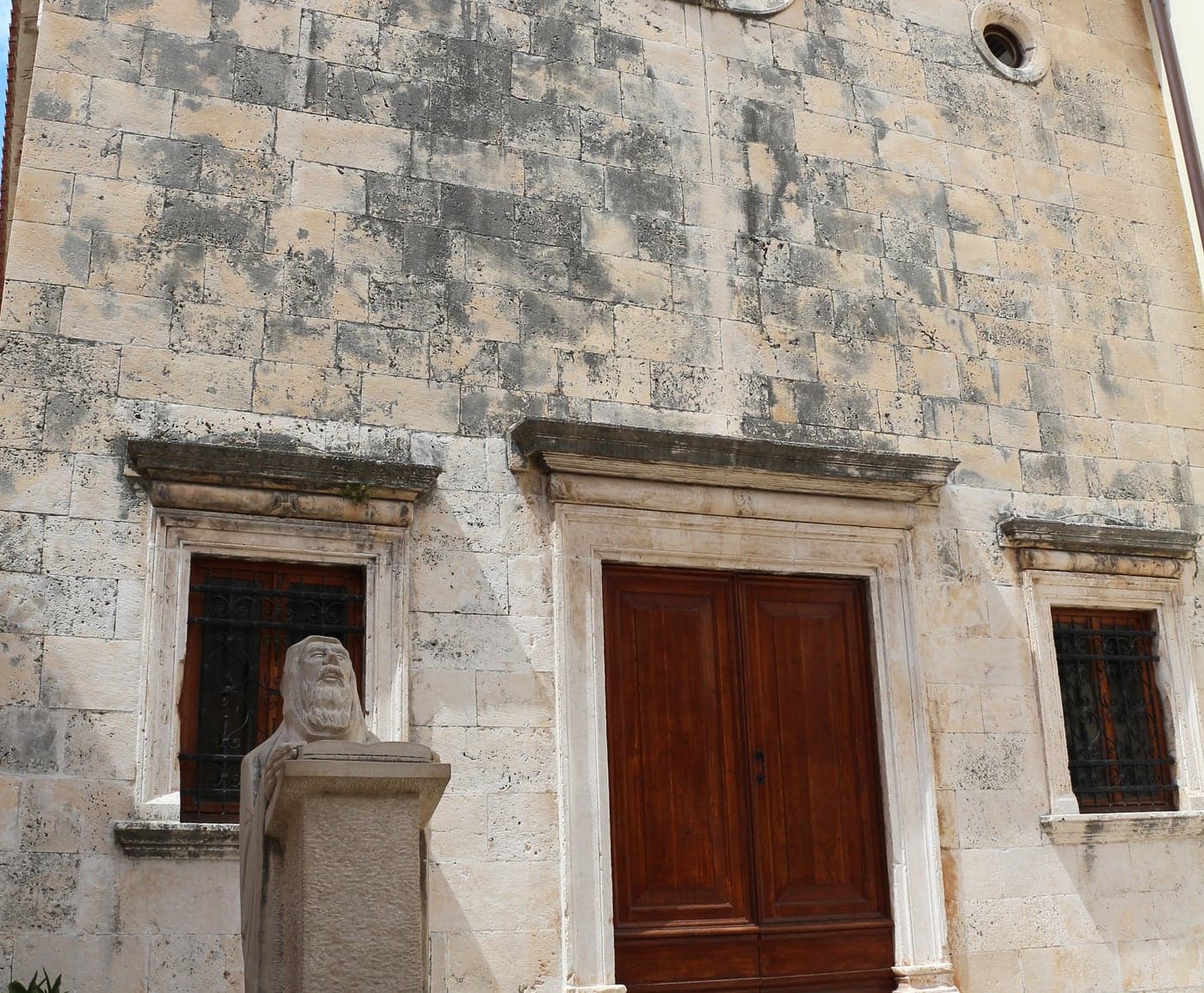
A closed house of Benedictine nuns since 1664, in the old Lucić palace — and, behind the door, the agave lace that UNESCO placed among the world's intangible heritage. The church of St Anthony stands beside it; the lace is seen by appointment, not in passing.
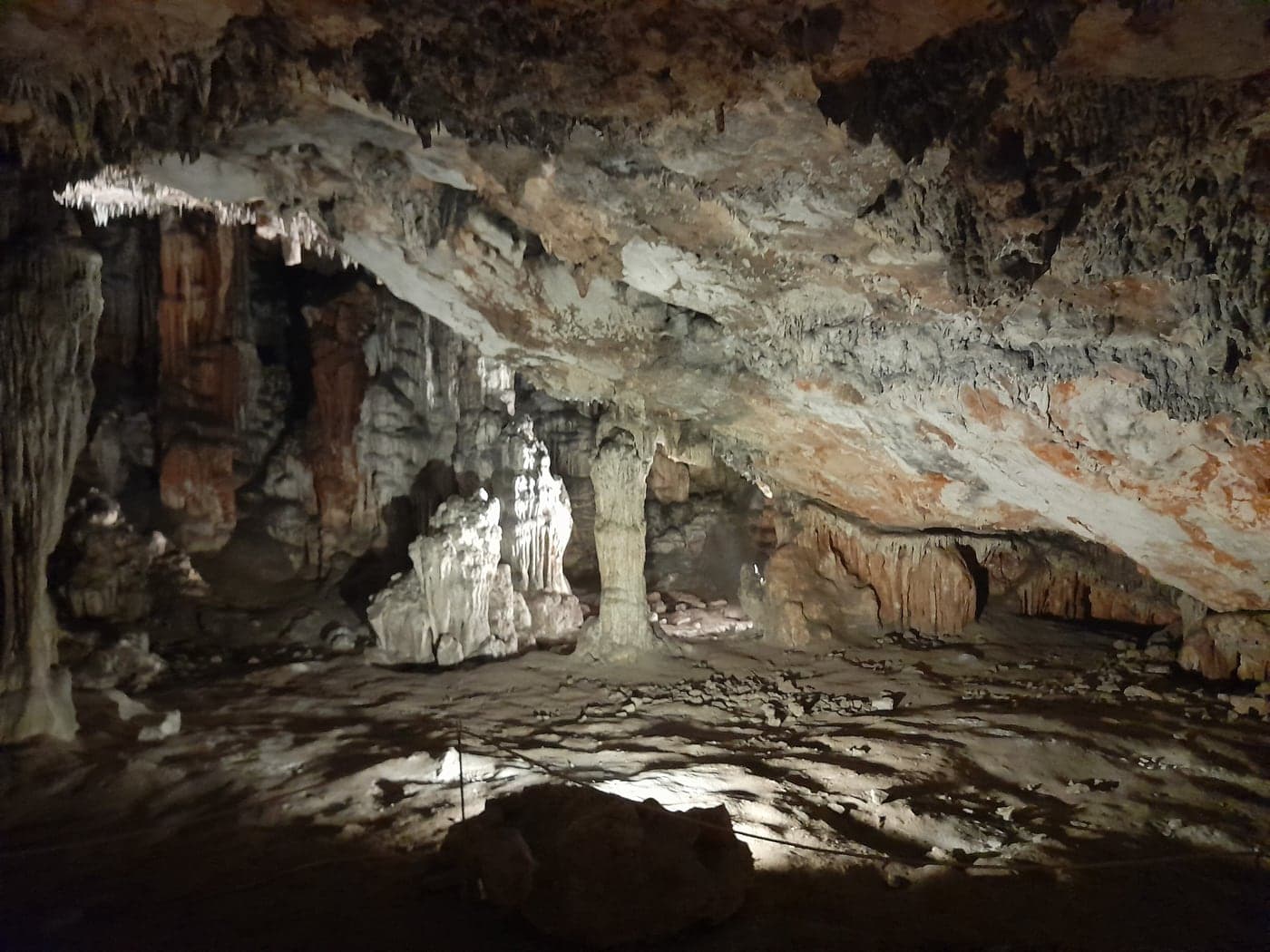
A palaeolithic chamber on the south slope near Humac, protected since 1964 — stalactites, a high mouth and the sea laid out below. It is visited with a guide, and only in small numbers; that is as it should be.
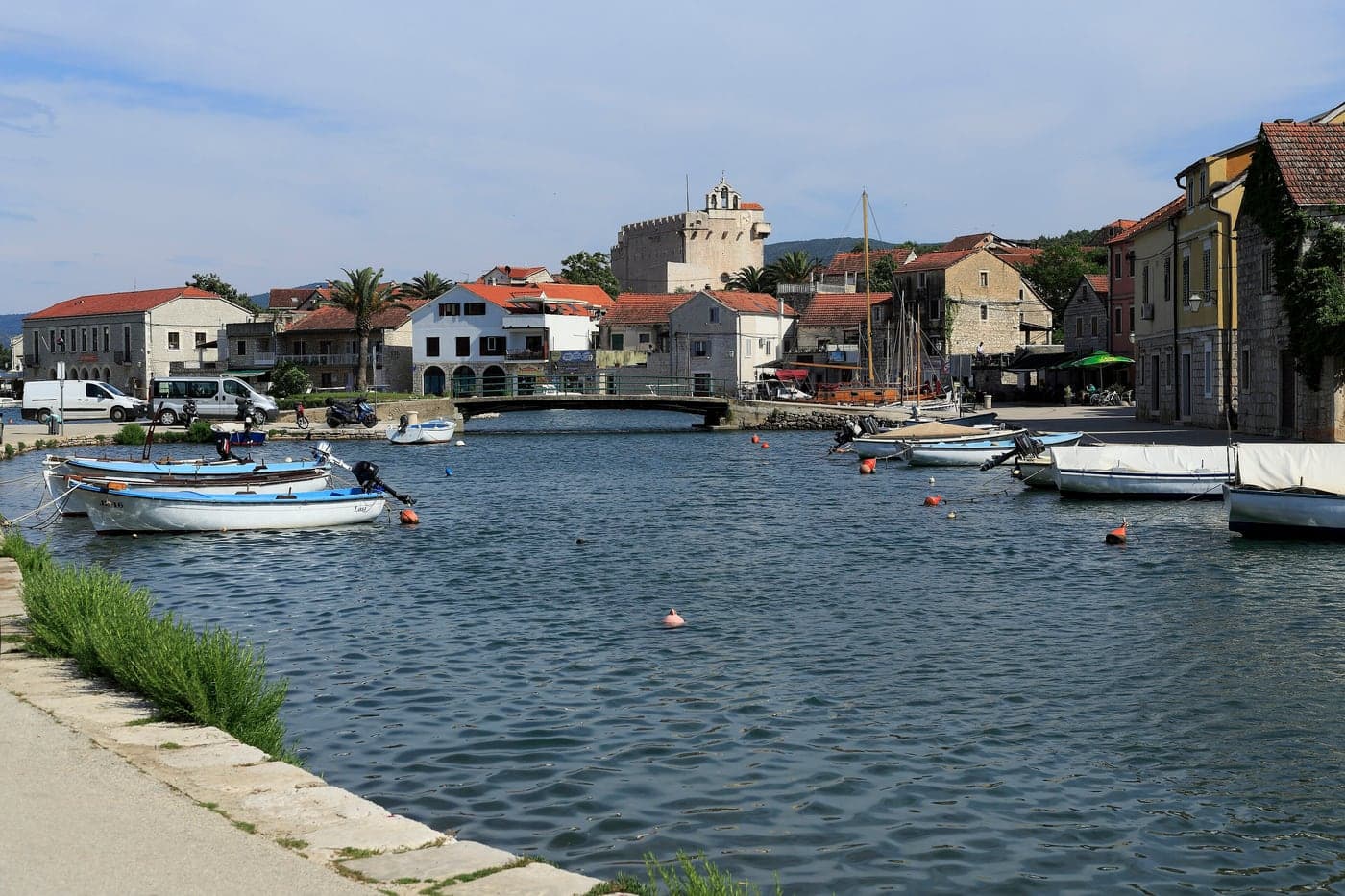
An easy loop of eight kilometres through Vrboska — stone bridges, the church-fortress of St Mary of Mercy, and the pine edge of the bay. Two and a half hours, almost no height; the kind of walk that belongs to late afternoon.
A first, curated preview selection — the full Pomalo collection, with partners carrying the seal, is in preparation. Ask the concierge for anything beyond this list.
← Back to what to do